Places to See: Angel, Nine Bridges and Synagogue
The main places of Užupis in one route: the Angel and mermaid, nine Vilnelė bridges, Užupis cafe, Art Incubator sculpture yard, Tibet Square, Bernardine Cemetery and the former Užupis synagogue.
Credits: Užupis photo archive
Places to See: Angel, Nine Bridges and Synagogue
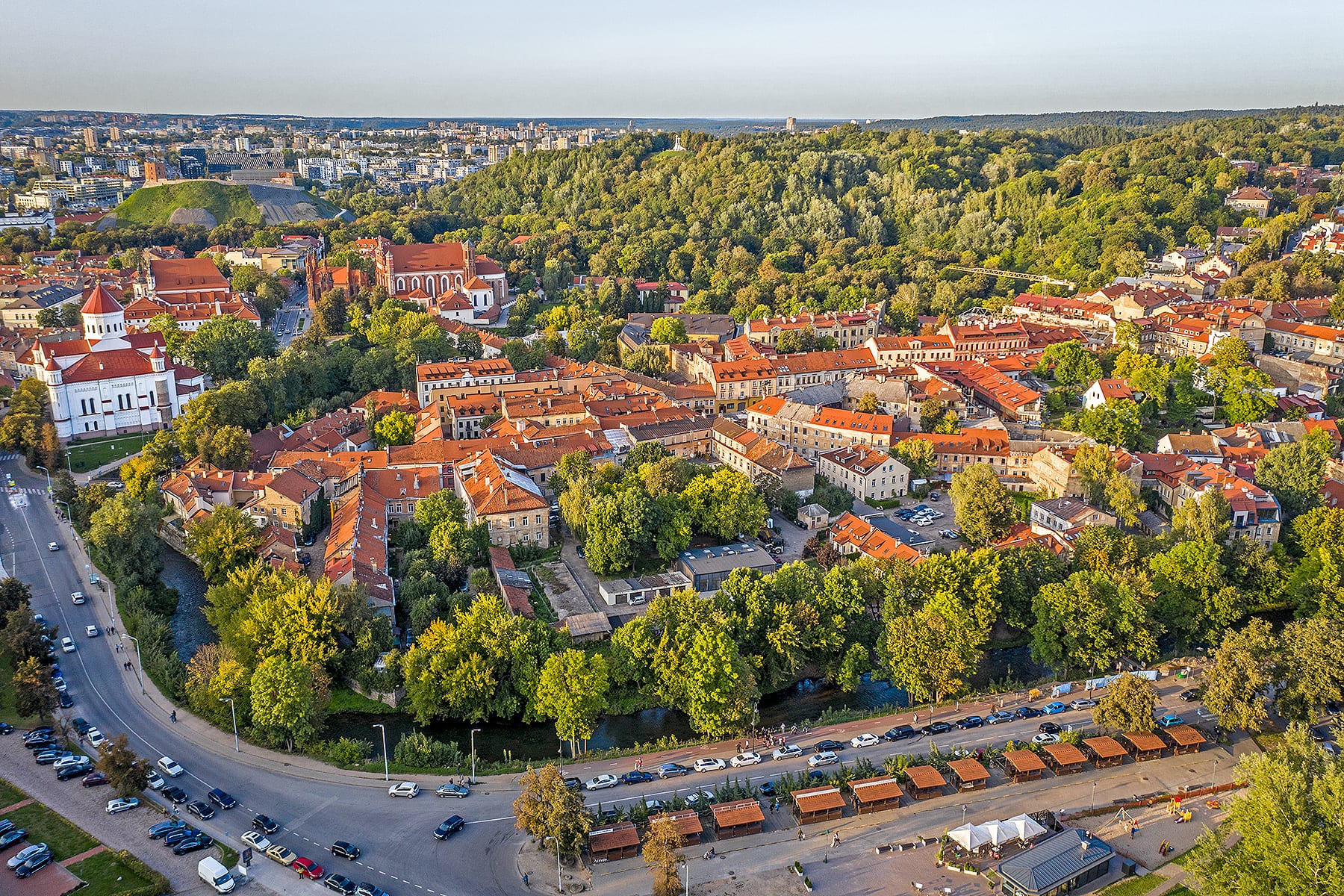
Užupis is dense with meanings. In half a day you can see the Republic's symbol, the Angel; the mermaid who lures guests from around the world; nine bridges from different centuries; the cafe where the state was born; and quiet places that recall a deeper, not always easy history of the suburb. Below are the main stops and the archive information preserved from the old site.
Angel of Užupis
In the square by Užupio, Malūnų and Paupio streets, a trumpet-blowing Angel stands on a high column (2002, sculptor Romas Vilčiauskas, architect Algirdas Umbrasas) - the clearest sign of the Republic. For a year before him, a large egg stood in the same place. The full story is told in Angel of Užupis.
Mermaid
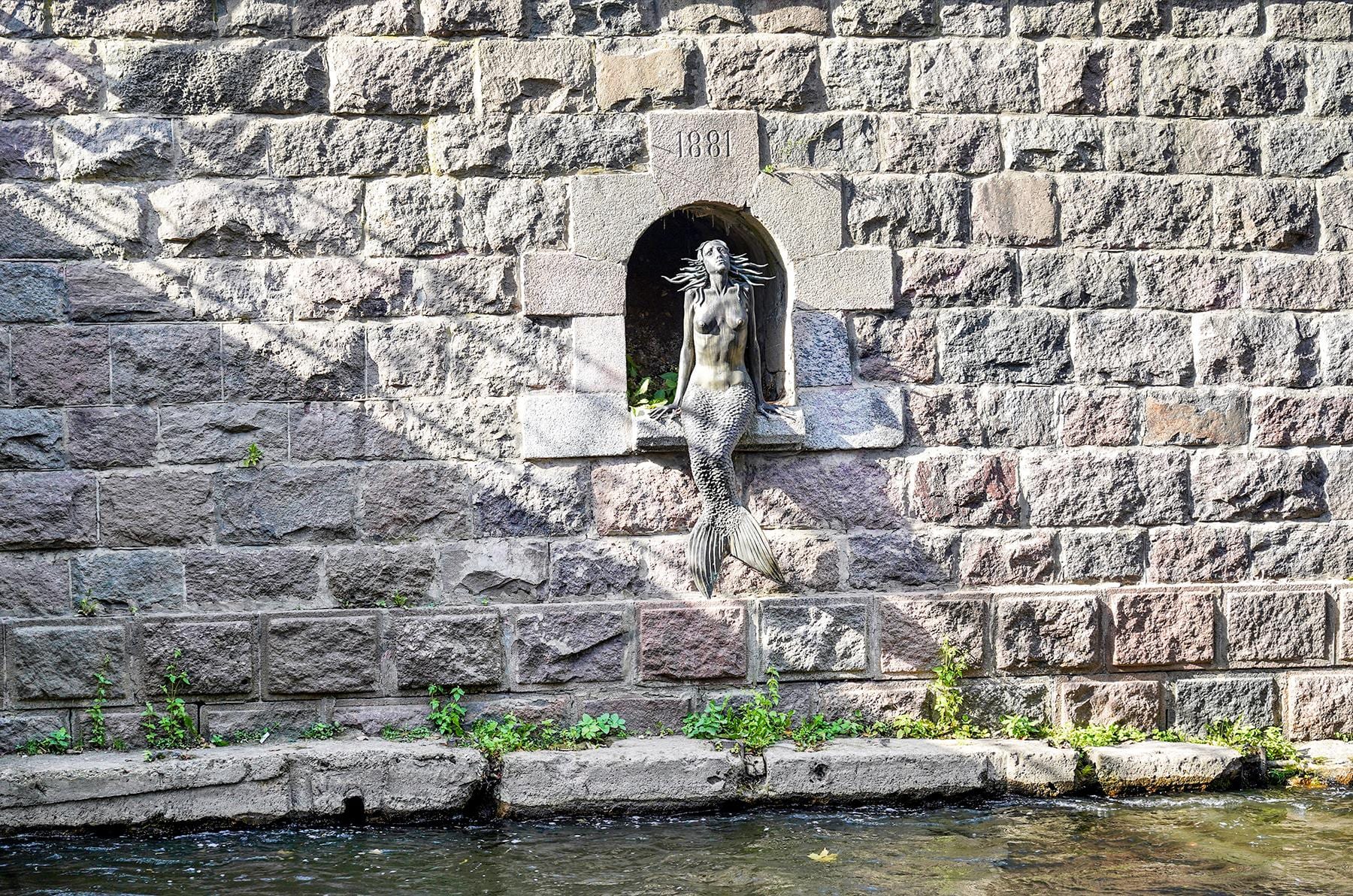
On the Vilnelė embankment, opposite the Užupis cafe terrace, a bronze Mermaid, also called the Maiden of Užupis, sits in a niche. She was imagined by cafe owner Jonas Krasnikovas and sculptor Romas Vilčiauskas. It is said that she lures people from all over the world into Užupis. In 2004, a rising Vilnelė carried her away, but divers found and returned her.
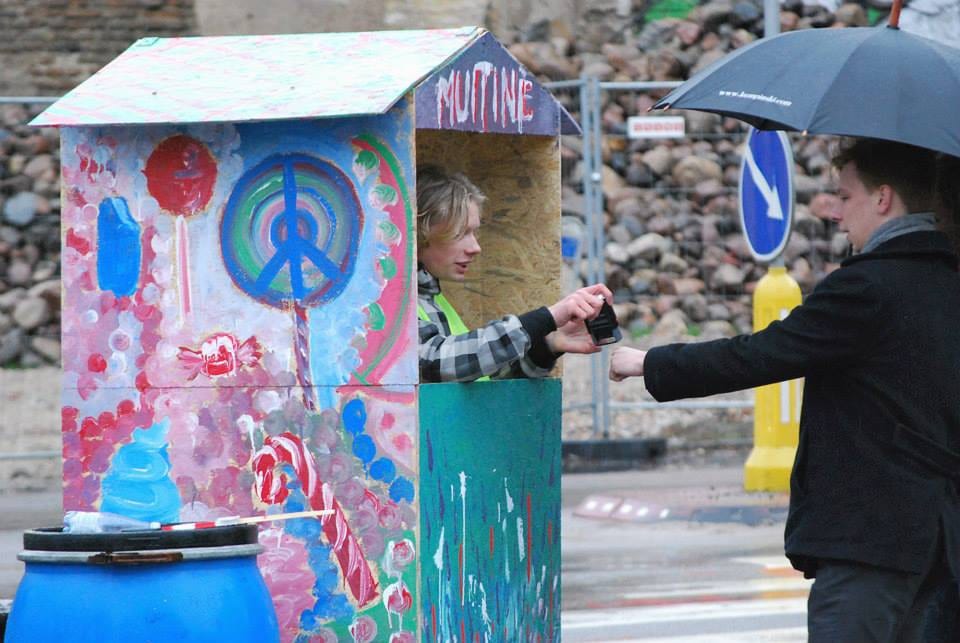
Užupis Cafe - the Barlament
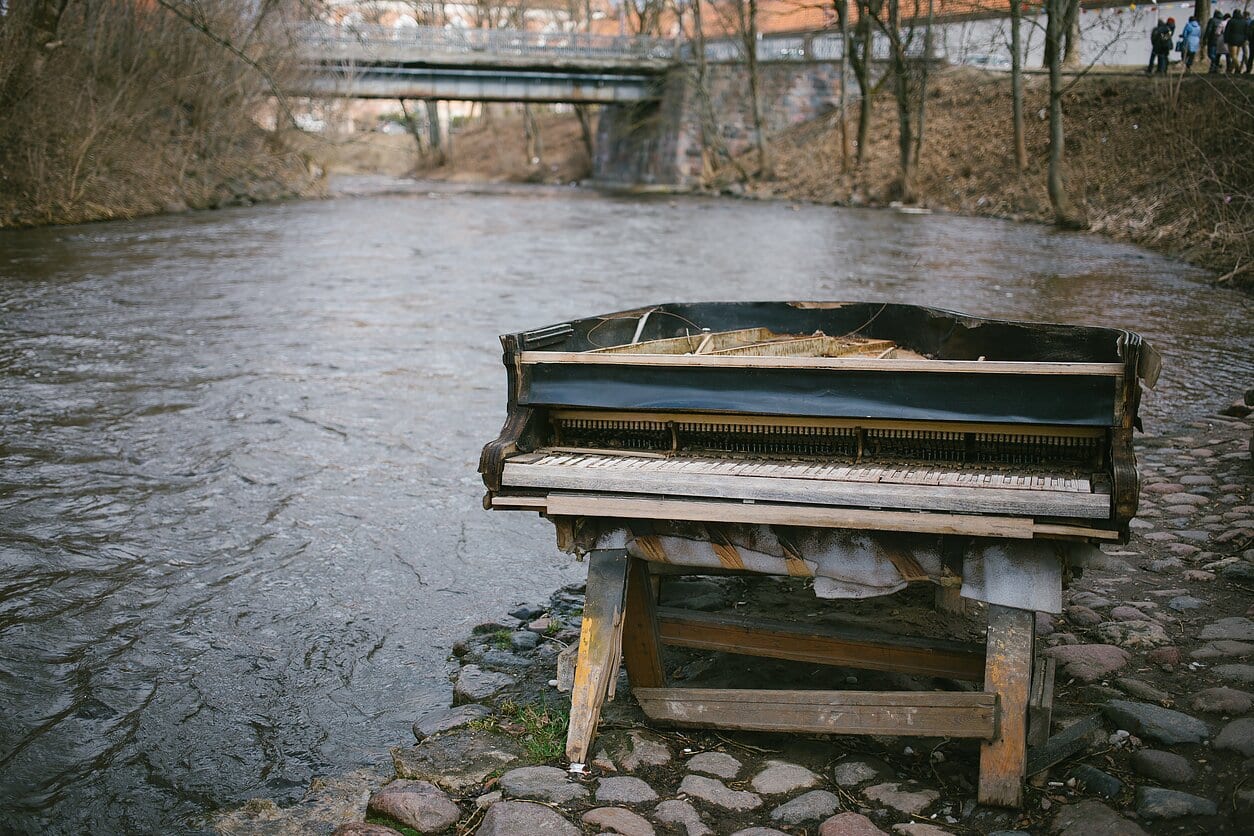
The Užupis cafe at Užupio g. 2 was the first and for several years the only cafe in the district. Its terrace opened in May 1997 - "where everything began". The Parliament meets here, which is why it is the Barlament; the Constitution was written here, and more than one Republic initiative began here.
Sculpture Yard of the Art Incubator
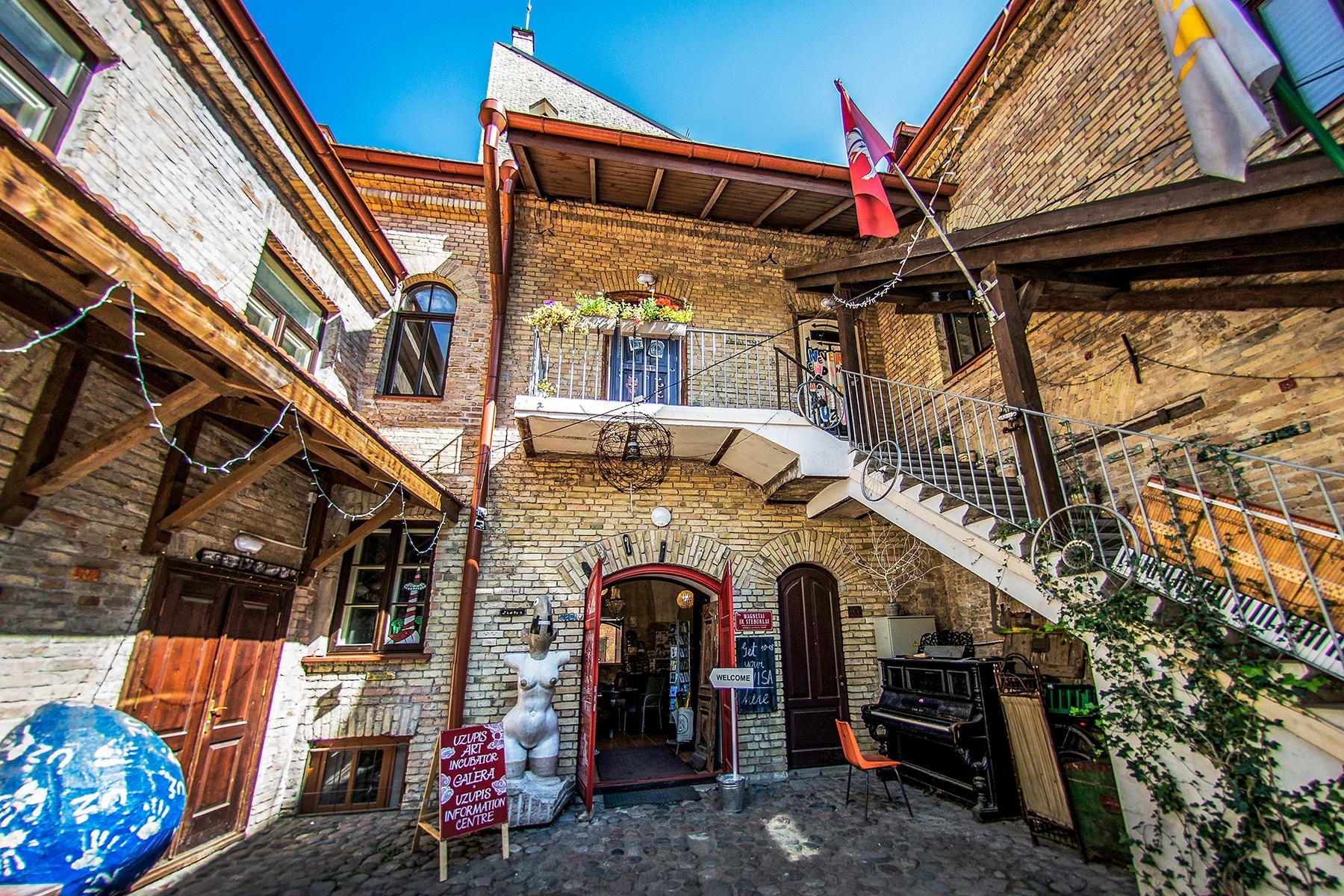
The Užupis Art Incubator at Užupio g. 2A is the heart of the artists' community, grown from an alternative art centre founded in 1996. Since 2000, its courtyard has held a sculpture alley with unusual, funny and puzzling works.
Tibet Square
Near the Bernardine church and bridge, on Malūnų Street, Tibet Square opened in 2010 - a sign of respect for Tibetan culture and solidarity with an exiled people. In 2013, during the 14th Dalai Lama's visit, the mosaic composition "Mandala" was unveiled here.
Bernardine Cemetery
One of the most beautiful and original cemeteries in Lithuania, founded in 1810 on the bank of the Vilnelė. It is a 19th-century historical monument where many people important to Lithuania are buried, including about twenty professors of old Vilnius University. Every All Souls' Day, residents of Užupis help tend the cemetery.
Bridges over the Vilnelė
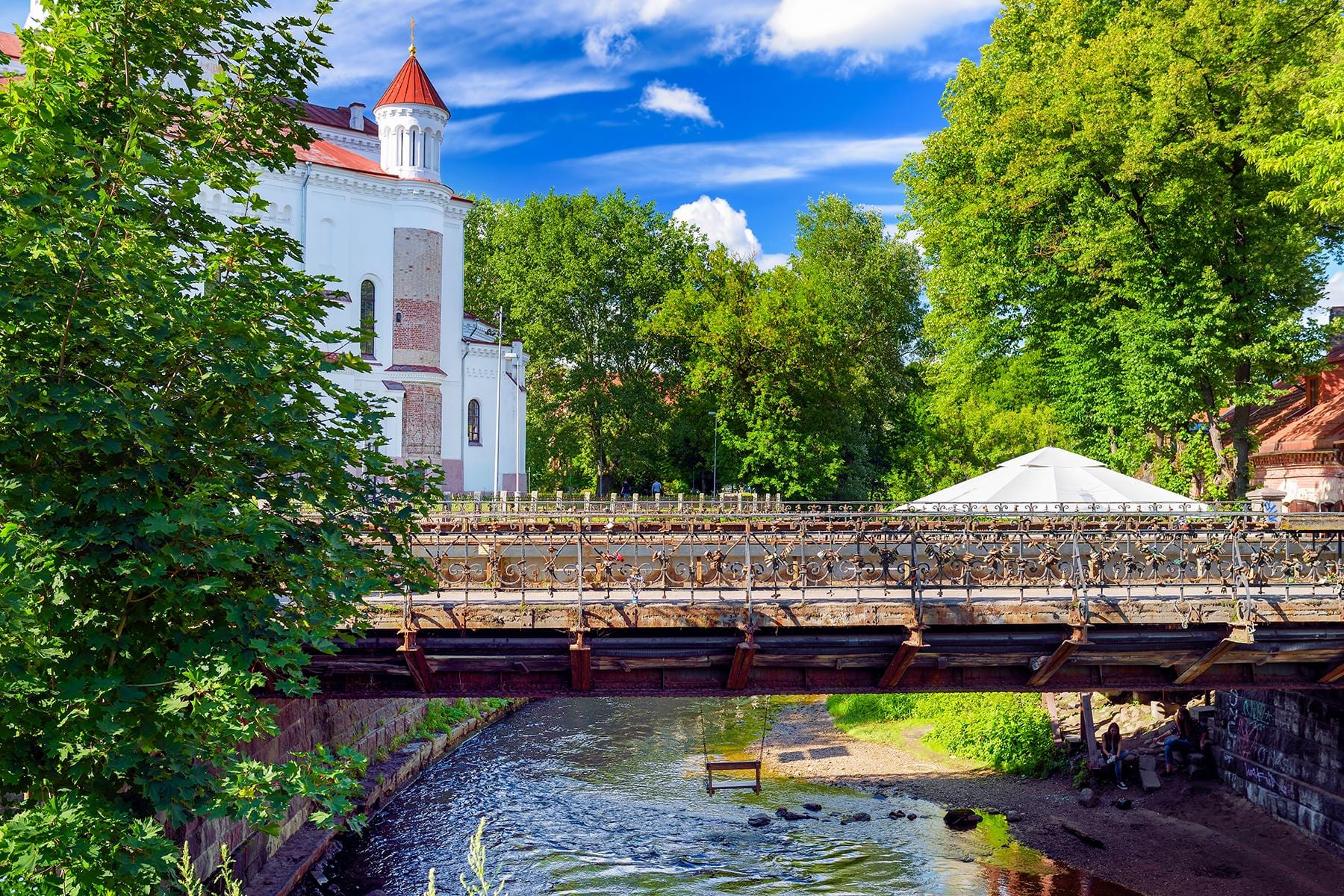
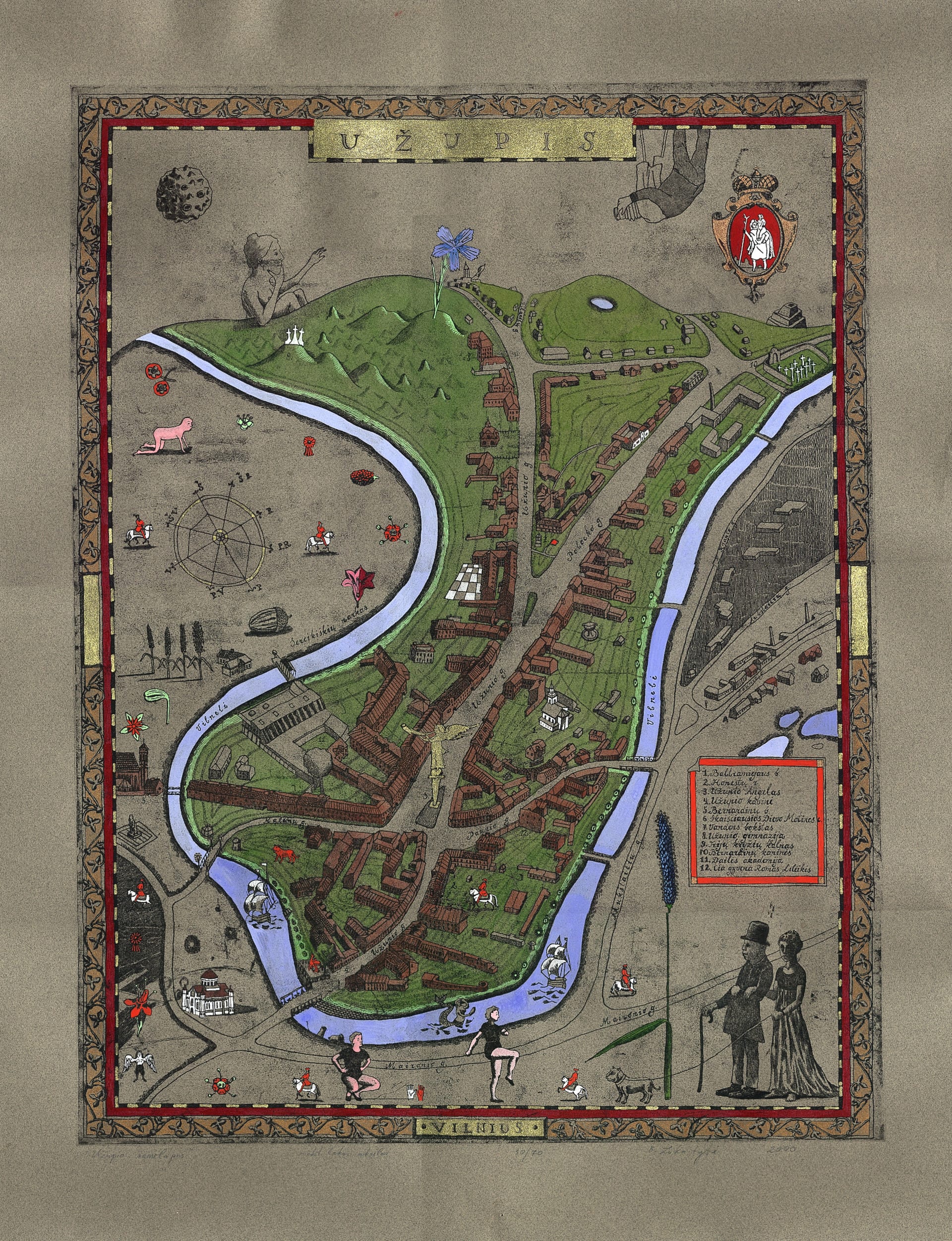
In Užupis, bridges are more than infrastructure. They mark the passage from Vilnius into the territory of the Republic, and on April 1 some become border posts. The old website preserved a drawing by Mindaugas Skudutis and a catalogue of nine bridges.
The Nine Bridges
- Castle Bridge (former names: Arsenal, Antakalnis, Mikhail). The Artillery Bridge built at the end of the 18th century was destroyed by a flood in 1800. The current Castle Bridge was built in 1893 by architect Julian Januszewski and reconstructed, with widening, in 1964. Its railings were decorated in 1892 with the Vytis and the tsarist crown; in 1964 they were removed, and in 1992 they were cast again, restoring the Vytis signs destroyed in Soviet times. The bridge is 7.7 m high, 34 m long and 20 m wide.
- Park Bridge. The Park Bridge near Kalnų Park connects Bernardine Garden and Kalnų Park. The old Republic material also associated this area with the residence of the ambassador of the Kingdom of the Netherlands in Užupis.
- Fluxus Bridge (former name: Bridge of the Vilnius Academy of Arts). Built in 1984, it connects the Vilnius Academy of Arts with Bernardine Garden. The architect was Vytautas Brėdikis. On April 1, 2007, it received the name Fluxus in memory of Jurgis Mačiūnas. It is the only covered pedestrian bridge in Lithuania.
- Nameless Bridge. At this bend in the Vilnelė, the river was once crossed by the building of the Bernardine Sisters' Convent of the Immaculate Conception of the Blessed Virgin Mary, whose arches led to the Church of St Francis of Assisi. After the building disappeared, another bridge was built nearby in 1839; the project author was Lieutenant Dilobil. The present bridge appeared during Soviet construction of the former Art Institute building.
- Bernardine or Malūnų Bridge. Built in the 19th century by the Royal Mill. Wooden bridges here had been called Bernardine bridges since the 16th century; in 1838 a new wooden bridge on masonry supports was built; in 1866 it was officially named after Catherine, but the name did not take hold. A metal bridge was completed around 1880 and reconstructed around 1956. Its length is 18.07 m. Every April 1, the Republic of Užupis pedestrian and passenger border post called Malūnų Bridge operates here.
- Užupis Bridge (former names: Spaso, Saviour). Permission to build a bridge here was granted in 1538 by King Sigismund the Old, connecting the Polotsk road, then the main road east toward Moscow. In 1795 one of the last battles of the army of the Grand Duchy of Lithuania, Vilnius residents and Užupis rebels against the invading army of the Russian Empire took place here; the effort to save Vilnius was immortalised in Justinas Marcinkevičius' drama The Cathedral. The current bridge was built in 1901 to a design by engineer V. Malinovsky. It is 19.9 m long and 9.68 m wide. Every April 1, the border post called Užupis Bridge operates here.
- Montmartre Bridge (other names: Kūdrų, Tymo). A pedestrian bridge connecting lower Užupis with the Tymo quarter and Missionary Gardens. It was built in Soviet times when a heating line had to be laid across the Vilnelė.
- Paupio Bridge (former names: Oginskis, Paplava, Paplauja). Mentioned as early as 1775. The current bridge was built in 1877 by a Warsaw company. After plans to strengthen sovereignty were activated, the Republic of Užupis border post called Paupio Bridge operates here.
- Bridge of the Dead. The bridge near Bernardine Cemetery was built in Soviet times when a heating line had to be laid across the Vilnelė. According to the old archive, it was later dismantled. A little downstream, a new bridge was built in 2018 and opened for use in 2019.
Užupis Synagogue and Jewish Memory
The story of the Užupis Synagogue requires a different tone from the Republic's jokes. It is a story of Vilnius Jewish community life, a funeral road, destroyed cemeteries, the Holocaust and preserved fragments of synagogue walls.
Užupis, or Zareche, is one of the oldest districts of Vilnius, mentioned in written sources since the 15th century. According to the census of 1887, there were 80 buildings in the district that belonged to Jews. When the old Jewish cemetery in Šnipiškės became full, a plot was allocated in 1829 on the edge of Zareche for the new Jewish cemetery of Vilnius.
At today's Užupio g. 36 and 38, a wooden synagogue stood on the slope above the Vilnelė until 1840, with the local market square opposite it. In 1841, a new one-storey stone synagogue was built on the same site. Electricity was installed in 1915.
In 1840-1849, the yeshiva here was led by the famous rabbi Yisrael ben Ze'ev Wolf Lipkin, known as Israel Salanter (1809-1883), founder of the Musar movement in Judaism. The Hebrew term musar means zealous adherence to the rules and laws of the Torah; disciplined moral and spiritual effort was central to the movement. In 1846, Sir Moses Montefiore (1784-1885), British baronet, banker, philanthropist and defender of Jewish interests, visited this synagogue.
From the Jewish quarter of the Old Town, a road led along Užupio and Krivių streets to the New Jewish Cemetery on Olandų Street; locals called it the Road of Death. The synagogue was a stopping place for funeral processions. From 1829 to 1939, about seventy thousand people were buried in that cemetery.
The Užupis Synagogue is also the main setting of The Agunah (1961), a novel by Chaim Grade (1910-1982), the Vilnius-born Yiddish writer.
During the Nazi occupation of Lithuania, the synagogue was closed in 1941 and badly damaged in 1942. In the Soviet period the building was rebuilt into apartments. Archaeological investigations were carried out on the site in 2012, and reconstruction in 2003-2016 adapted the building as a private residence. Several fragments of the synagogue wall decoration have been preserved in the interior. Most Jewish residents of Užupis were murdered during the Holocaust.
The old site's 2020 text notes that the historical memory of the Užupis Synagogue is revived and preserved by the Užupis community and the Government of the Republic of Lithuania. The old archive also preserves Hebrew and Russian text versions.
Further work: add bridge galleries, verify the current condition of the Bridge of the Dead and the synagogue building, include the Hebrew and Russian synagogue versions, and arrange everything into a walking route on the map.